

 Petra Doubková, founder and CEO of EcoHaus
For me, sustainability has never been just about ecology. It’s the way I think about everything – from the product and marketing to who we employ and how we care for our customers. I see it as the connection of environmental and social impacts, a commitment to doing things honestly, transparently and with respect for people and the planet. I’m grateful that a conscious and loyal community of like-minded people is growing around EcoHaus. The fact that hundreds of customers come back to us for our products every day confirms to me that we’re on the right path.
Show more Show less
In my eyes, sustainability is not an easy discipline. It’s a huge field full of study, testing, difficult decisions and small details that may not be visible at first glance, but whose impact is big. And yet I enjoy its diversity and difficulty immensely.
Our vision is simple:
for eco-friendly household care to be not a luxury, but the standard.
So that everyone can reach for household products that
work, are high quality and at the same time don’t burden health or the planet.
With the certainty that when they buy them, it will be the best possible choice on the Czech market.
That’s why at EcoHaus we invest hundreds of thousands in quality testing. That’s why we reject greenwashing. That’s why we don’t take the path of discount gimmicks, but the path of long-term value. That’s why everyone shopping with us has the security of our satisfaction guarantee and money-back guarantee. And I’m proud that out of more than 100,000 customers, only three have used it.
Thank you for your trust in our brand and for supporting a sustainable approach to life!
One product, many uses
We minimise chemicals and plastic consumption, because we see no reason to buy 10 bottles of different cleaners for one household. You don’t need a cupboard full of household products – a few top-quality, functional products are enough.
Simple ingredients mean functionality
Expensive, over-coloured and over-perfumed formulas often mask low quality. EcoHaus goes back to the essentials: effective, science-based formulas without filler.
Eco-friendly laundry isn’t a luxury, but the new “normal”
No unnecessary water in the product. No plastic bottles. No microscopic residues of irritating chemicals. Effective even at low temperatures.
Packaging gets a second life
We put paper back into circulation, recycle, and eliminate plastic wherever it makes sense. We don’t throw away products with damaged packaging or approaching their best-before date.
Skin should be protected, not burdened
Textiles we wear 24/7 shouldn’t contain anything that harms the skin or health. We eliminate allergens, irritating fragrances, fillers, optical brighteners and petrochemical raw materials.
We want to make things in Czechia
We’re building a factory in Czechia to shorten transport, create jobs and strengthen the transparency of production.
Sustainability grows from education
We invest in education – not only for our team, but also for the public. EcoHaus wants to be the most trustworthy source of information. More here: Propereme to! podcast
EcoHaus is built on five pillars

Simplicity
We believe that one product can have multiple uses and that a home doesn’t need to be full of unnecessary chemicals. Our formulas are simple, effective, and free of unnecessary additives. Fewer products, more purpose.

Innovation
We build on science, testing, and collaboration with universities. We invest in OECD tests, packaging development, and new formulations. For us, innovation means continuous improvement based on data.

Honesty
Our products are made with care and a personal touch. We work with people with disabilities and sheltered workshops, where every item is crafted with love and attention to detail. For us, integrity means choosing high-quality ingredients and never cutting corners when it comes to health or functionality. We make things the way we’d want them made for ourselves.

Sustainability
Environmental and social impact—from FSC-certified packaging and biodegradability to sheltered workshops and local production of most of our products. You can find specific details in the product descriptions, or feel free to contact us at petra@ecohaus.cz

Quality
Our products are effective, safe, and laboratory-tested. You can rely on their quality—we guarantee it.
Products without unnecessary water | SDG 12
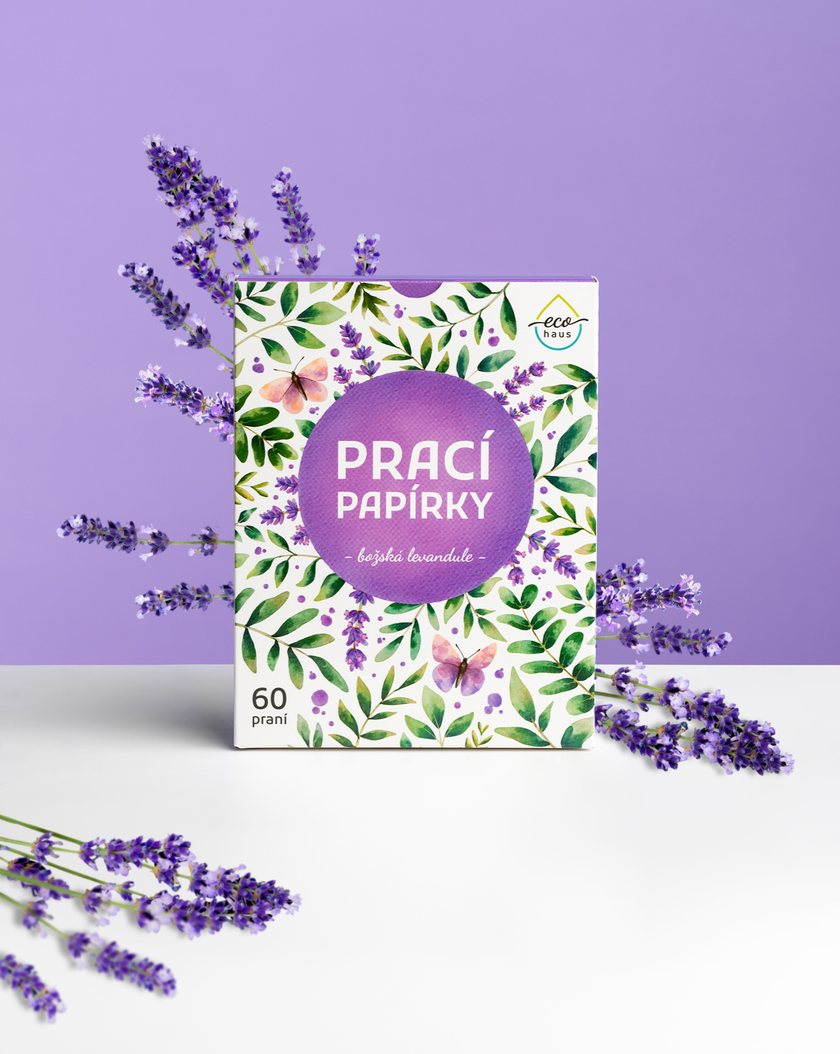
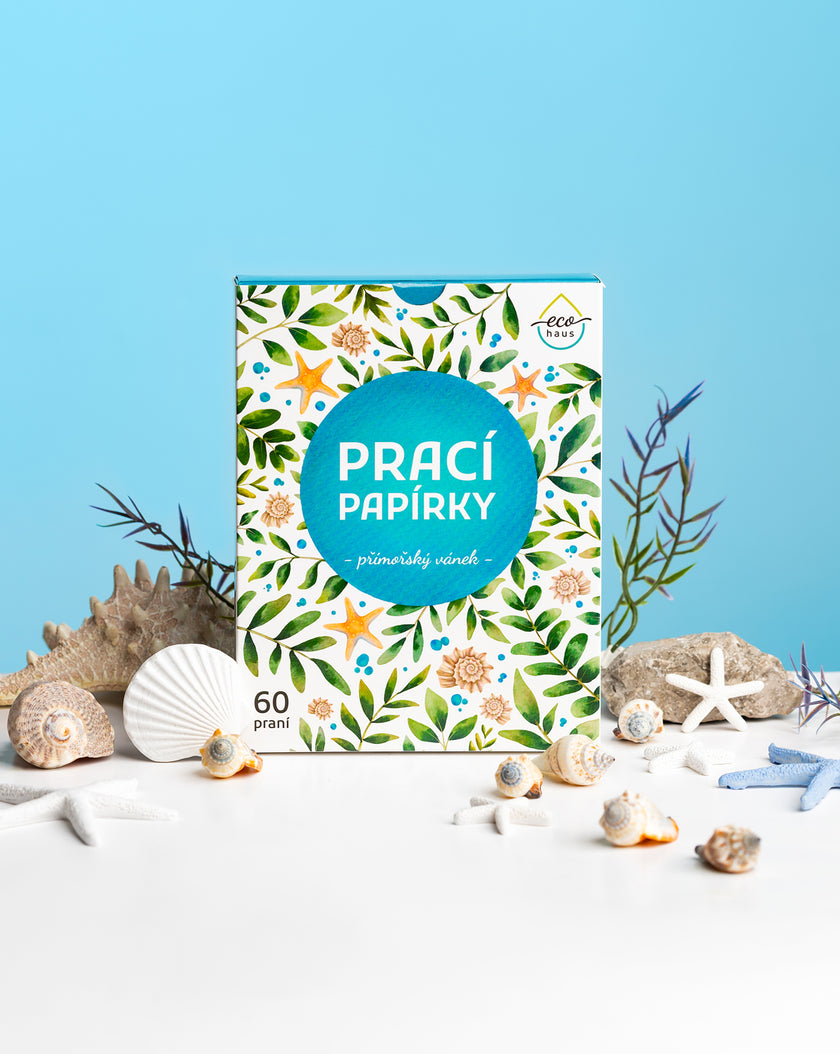
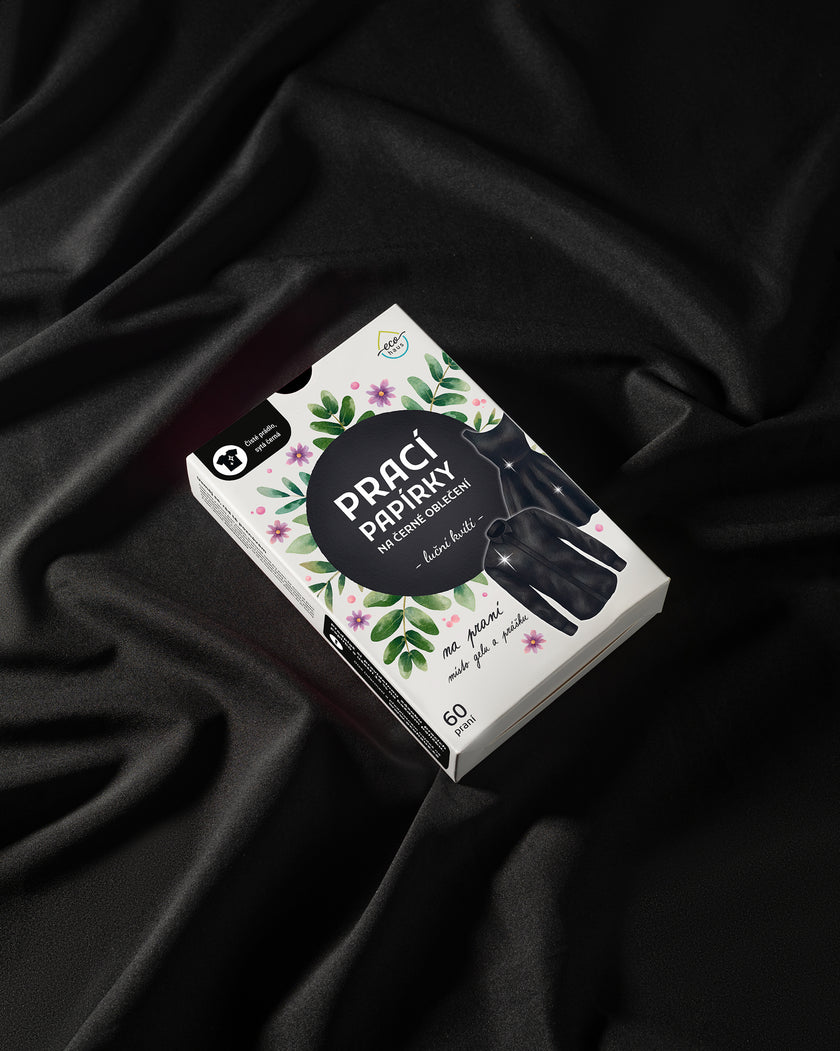
Conventional laundry gels consist largely of water. EcoHaus laundry detergent sheets contain concentrated active ingredients without water.
No single-use plastics | SDG 12 • SDG 14
For most of our products, we eliminate plastic bottles and plastic packaging and use FSC®-certified paper.
FSC® fully recyclable packaging | SDG 15
A special multi-layer paper barrier protects the laundry detergent sheets even in the bathroom. FSC packaging supports renewable resources and responsible forest management.
Laundry detergent sheets and dishwashing sheets are biodegradable | SDG 6 • SDG 14
The formulation of our laundry detergent sheets and dishwashing sheets is designed to respect OECD standards for biodegradability and not to endanger aquatic ecosystems. Variants of EcoHaus laundry detergent sheets were tested by a laboratory of the Technical University of Liberec according to the OECD 301 F method. The complete product was tested, dissolved in a standard test medium with microorganisms from a wastewater treatment plant.
200,000+ plastic packages saved every year | SDG 12
Reality, not a promise. We measure our impact transparently. Real, measurable waste savings thanks to high concentration and paper packaging.
Carbon footprint measurement | SDG 13
Since 2024, we have been analysing the carbon footprint of our laundry detergent sheet products according to ISO 14067, and we plan to extend this to the full environmental profile of the product (LCA).
We’re proud of our EU Ecolabel certification | SDG 12
It is confirmation by independent authorities that the products meet the strictest environmental criteria. In our range, you’ll find it on our Dish Soap, Toilet Cleaner and All-Purpose Cleaner.


Cooperation with sheltered workshops | SDG 8 • SDG 10
We work with sheltered workshops, where some of our products are made with incredible care and a human touch. People with disabilities assemble orders, sew textiles and finish corporate gift packages, which are the heart of our entire production.
Employing people with disabilities | SDG 8 • SDG 10
We believe in equal opportunities for everyone. That’s why we create jobs for people with disabilities in a safe environment with full support that respects their individual needs.
Alternative fulfilment for companies | SDG 8 • SDG 10
We help companies meet their legal obligations regarding the employment of people with disabilities (alternative fulfilment of the disability employment quota). At the same time, we support meaningful jobs that have a real social impact and change lives for the better in the long term.
Supporting single mothers | SDG 1 • SDG 5 • SDG 10
We support M.arter, a non-profit organisation that helps parents find their place in working and personal life again. In 2025, we handed them a cheque for CZK 25,000, and we continue to help. We also provide material help to people in difficult situations in cooperation with the organisations Locika and Nadační fond Radovan.
Mentoring & education | SDG 4 • SDG 5
Petra has long been mentoring women in the Minerva 21, Holky z Marketingu and Holky z byznysu programmes and at the Prague University of Economics and Business (VŠE). We actively support young talent. Four students from the Technical University of Liberec have already completed a year-long internship with us.
Public education SDG 4 • SDG 12 • SDG 13
Thanks to our wide organic reach, we reach more than 5 million people every month, whom we educate about a healthy home, ecology, sustainability and a smart lifestyle. You’ll find us on all major platforms, from quick reels to long YouTube formats and practical tips on Pinterest. Our educational work also includes the podcast Propereme to!, where we invite personalities from science, ecology, chemistry, health and professional home organisers. We open up topics that aren’t usually talked about or are often taboo, and we explain them in a human, clear way, without scaremongering. We regularly organise events, workshops and talks, where we share know-how, inspire and bring practical solutions to every household. Our founder Petra is an active part of discussions about sustainability, speaks at professional conferences and takes part in panels with leading experts.
Research & development SDG 9 • SDG 12 • SDG 13
We want to be at the top of this field, we innovate constantly. Our founder Petra Doubková studies industrial engineering & textile technology at the Technical University of Liberec, where she researches detergents and modern cleaning technologies. She has also been accepted for a prestigious internship at Harvard as part of her doctoral studies, where she will continue researching sustainable cleaning systems and safe biosurfactants. Thanks to this, we bring the latest scientific findings directly into every EcoHaus product.
Production in the Czech Republic SDG 8 • SDG 9 • SDG 12 • SDG 13
We’re building our own factory, which shortens the supply chain and strengthens transparency. All of this is part of our long-term mission to support Czech production and bring products with minimal impact and maximum quality to the market. More here.
At EcoHaus, sustainability is a comprehensive issue for us. We consciously develop it across all areas of our business.
- environmental pillar – product development and content, our approach to packaging materials, data-based analysis of products’ environmental profiles,
- social sphere – cooperation with sheltered workshops, employing people at a disadvantage, substitute performance for companies, support for single mothers
- innovation, which we strive to bring to the household products sector, aiming to lead the way in making it more sustainable.
We focus on innovation through:
- public education
- building a factory in the Czech Republic
- developing new product formulas that are gentler on the skin
We work with experts and independent consultants from EnviTrail.
We follow technical standards and guidelines.
Our communications have been reviewed for greenwashing—we focus on communicating scientifically substantiated data and facts about our products and operations.
- Wash at lower temperatures.
- Use sparingly and according to water hardness.
- Recycle packaging.
- Don't waste the product or wash unnecessarily
Less washing = fewer pills. Don’t automatically toss clothes in the hamper after every wear. Often, airing them out or spot-cleaning is enough before starting another wash cycle.
Protect your clothes from dirt. When cooking, gardening, or cleaning, reach for an apron. You’ll save expensive fabrics and favorite pieces from grease and stains.
Don’t wash too often. Washing breaks down fibers and shortens the life of your clothes. Delicate fabrics feel the effects first.
Use laundry bags. Protective bags keep lace, bras, merino, and silk safe. They help prevent misshaping and mechanical damage.
Store clothes in garment bags. Store valuable or delicate clothes in special garment bags. They’ll protect them from friction, dust, and moths.
Air-dry your clothes. Most fabrics last longer when you let them dry naturally. This minimizes the risk of shrinkage, friction, and static buildup.
Find more handy ideas and tips on our blog or on Instagram.
Yes. Calculating the carbon footprint of laundry detergent sheets in 2025 is the first step. Our goal is to expand environmental reporting to include additional products and stages of production, giving customers a fully transparent view of our impacts and progress.
- Yes, construction is highly carbon-intensive, but that is precisely why we want to lead by example and renovate an existing building.
- The main goal is to shorten the supply chain and increase transparency in production.



Really remove? It might not be available anymore.