

Obsah aktuální k datu 15. 9. 2025
How to wash home textiles so they look like new
Are you getting ready for a big clean and want your laundry to sparkle? The key is washing it properly. Learn how to wash your household textiles so they smell lovely and always look like new. Here’s a complete guide – from towels to curtains .
Natural fibers such as cotton, wool, and silk are generally more sensitive to heat and mechanical stress. For example, wool and silk should be hand-washed or washed in the machine on a special delicate cycle at low temperatures to prevent damage or shrinkage. Cotton is more durable and can withstand washing at higher temperatures, which is useful for removing stubborn stains and bacteria.
How to wash towels
Wash towels regularly at a higher temperature of 60 °C to keep them hygienically clean. Use quality laundry detergent and avoid fabric softener, which reduces absorbency.
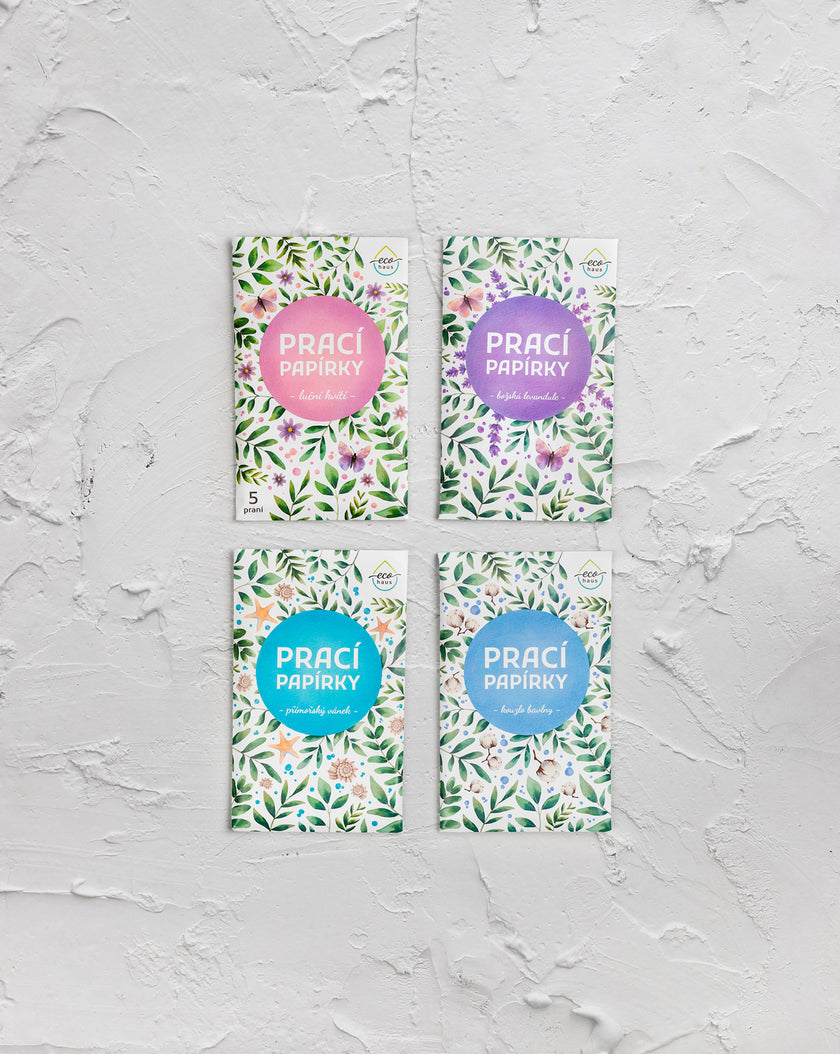
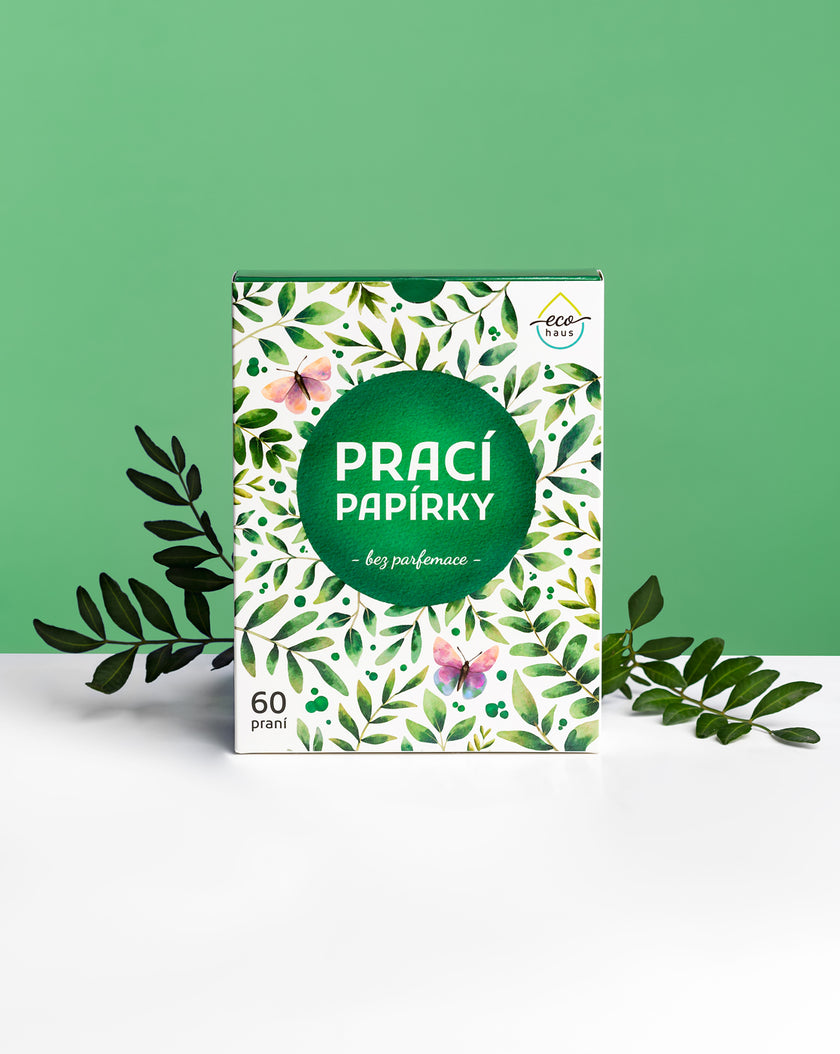
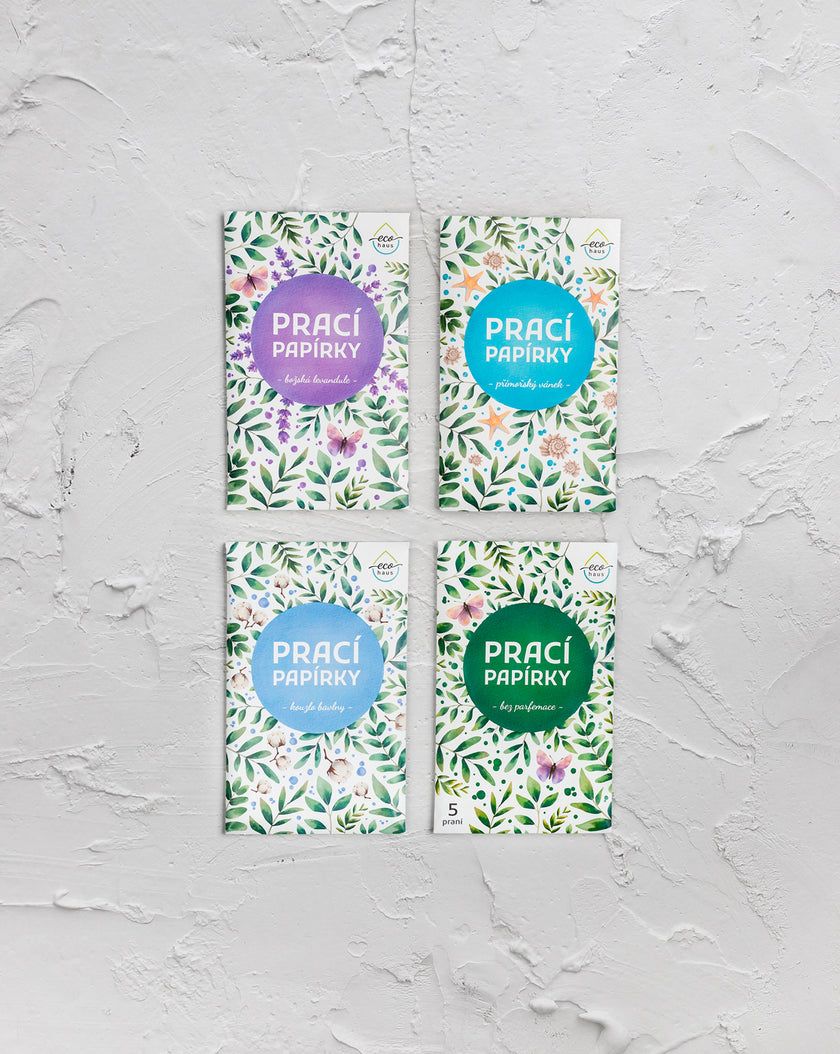
White towels can be tricky, but there’s a solution to that too. Take a look at our recipe for soft, brilliantly white towels. First, soak them in warm water and sprinkle with baking soda. Leave them to soak for a few hours, then transfer them to the washing machine. Place an Ecohaus laundry detergent sheet underneath. Add one sachet of baking powder and a little white vinegar.
Finally, add a few drops of natural essential oil to the towels to leave them smelling lovely. Set the washing machine to 60 °C and look forward to a snow-white result.
Beware of fabric softener.
Do you use fabric softener when washing towels? It’s better not to. Fabric softener coats the textile fibers, reducing their absorbency. The solution is EcoHaus laundry detergent sheets, which soften towels while preserving their absorbency. Thanks to the detergent sheets, your laundry will have a delicate fragrance even without fabric softener.
Do you only have a towel for your face?
Every face deserves its own towel. Do you know why? Bacteria can easily build up in a towel. When you use one towel for your whole body, you transfer more bacteria to your face, which can make acne worse. A special face towel is well worth it and benefits your skin—it helps keep it clean and healthy.
How to wash dish towels
Dish towels hold up well to frequent washing at higher temperatures. Wash them separately from delicates at 60°C to remove all bacteria. Since dish towels and hand towels can withstand the same washing temperature, you can safely wash them together. If you need advice on removing stains, we have an article for you: Get Rid of Stains Easily and Effectively.
TIP Looking for high-quality dish towels?
Fed up with kitchen towels that don’t absorb anything? Try the new dish towels from EcoHaus. You’ll love them because they’re highly absorbent and quick-drying. Their modern design and elegant beige color are a perfect fit for any kitchen. See for yourself how good they are.
How to wash bed linen and sheets
Bedding should be washed once every 14 days. Allergy sufferers should change their bedding even more often, ideally every 3 days. Proper washing is important for preserving colors and extending the life of the material. Turn the bedding inside out and wash it at a minimum of 40°C. Use gentle detergents. For example, EcoHaus laundry detergent sheets are a good choice.
How to Wash Blankets and Throws
Washing blankets and throws requires care to help them retain their quality and appearance. First, check the care label for information on the appropriate cleaning method. Always wash blankets and throws according to their material – some can be machine-washed on a delicate cycle, while others need to be taken to a dry cleaner. How often you wash them depends on how frequently you use them.
We recommend washing blankets used daily at least once a month, while decorative throws only need to be cleaned a few times a year. Wash each blanket or throw separately, without other laundry, to prevent damage and ensure it gets properly cleaned. Choose a cycle for delicates, hand-washing, or wool, depending on the material.
How to Fold a Blanket Neatly
Blankets come with one unpleasant problem: folding them. Thanks to our clever trick, you can fold a blanket easily and neatly. Fold the blanket to create a pocket, then tuck the other end into it. This creates a tidy little bundle. It looks like a cushion and is much nicer to look at than a blanket tossed on the sofa. What do you think—will you give our trick a try?
How to wash duvets
Don’t forget your duvets during spring cleaning. They should be washed at least twice a year. Fold the duvet as shown in the video so it takes up as little space as possible in the washing machine. Add an Ecohaus laundry detergent sheet underneath the duvet. We also recommend baking soda for better disinfection and removing dirt.
Always wash duvets according to the manufacturer’s instructions. Natural materials in particular (feathers and wool) require special detergents. For a down duvet, don’t use fabric softener, as it can affect the down’s natural properties. Choose a delicate wash cycle or a dedicated down cycle, if your washing machine has one. Set the temperature to no more than 40 °C and use a low spin speed (400 rpm).
Put the down duvet in the tumble dryer after washing. If you want it to dry faster and fluff up nicely, use 3 wool dryer balls. Don’t dry the duvet in direct sunlight, as some of the down may become too dry while the rest remains damp.
How to put a duvet cover on easily and quickly
Putting a duvet cover on is easy when you know how. Leave the cover inside out, as you do when putting it in the washing machine. Put your hands inside the corners, then grab one corner of the duvet with each hand, as you can see in the video. Then just turn the cover right side out and give the duvet a good shake. Easy, right?
How to wash wool
Wool is an exceptional material. Its properties mean it needs to be washed only infrequently, even when it comes to blankets. Usually, airing out wool blankets is enough, or you can hand-wash them in lukewarm water at no more than 30°C. You can also take them to a dry cleaner.
It’s best to avoid tumble-drying wool, and never put wool garments on a radiator. The best way to dry a sweater is to lay it flat, ideally on a drying rack covered with a towel. Place the sweater on the towel and let it air-dry naturally. This will prevent it from losing its shape.
TIP How to rescue a shrunken sweater
Did your wool sweater shrink in the tumble dryer? There’s still a chance you can restore it to its original size. Soak it in lukewarm water with a little hair conditioner to loosen the fibers. After 20 minutes, take the sweater out of the water and gently squeeze out the excess. Lay it on a towel and gently stretch it back to its original size.
How to wash curtains
Washing curtains requires a gentle approach to help them retain their appearance and avoid damage. First, soak them in cold water with a little detergent to loosen the dirt. You can use an EcoHaus laundry detergent sheet.
Then put them in the washing machine and select a delicate cycle at around 30 °C with a low spin speed, ideally no more than 400 rpm.
As soon as the wash is finished, take the curtains out of the machine and hang them back on the windows while still damp. They will smooth out under their own weight, so there’s no need to iron them.
How to wash tablecloths
It’s best to wash tablecloths at around 40 °C. Higher temperatures could damage the fabric or cause the colors to fade. Treat any stains before washing. For helpful tips, check out our article Get rid of stains and spots easily and effectively.
Leave tablecloths to dry flat on an even surface or hang them up to help them retain their shape. You can iron cotton tablecloths at higher temperatures, ideally inside out to avoid damaging them.
How to remove dried wax
Do you have candle wax on your tablecloth? You can easily remove it as follows. Reheat the wax with a hairdryer, then place a paper towel over it and wait for the wax to soak in. Only a greasy stain will remain. Drizzle it with dish soap, and the tablecloth can go in the washing machine.
Tips for Maintaining and Storing Home Textiles
Caring for textiles doesn’t end with washing and drying them properly. Storage also plays a role. Vacuum bags protect seasonal clothing from clothes moths. Air out your closets regularly and use lavender scents. This will keep your clothes fresh and ready to wear when you take them out again.
TIP How to get rid of moths
Did you know that one in eight households is infested with clothes moths? You can get rid of them by storing seasonal clothing safely. Pack your clothes in vacuum bags and, most importantly, add lavender, which repels moths. A room spray with a lavender scent is easy to use. A few drops of essential oil work great too.
Keep your textiles in top condition.
Regular and proper care of your household textiles will ensure they serve you for years. Use different washing methods for different types of fabric. Whether it’s towels, bedding or curtains, every piece of fabric deserves a little care. Learn how to wash household textiles properly so your items stay beautiful and functional for as long as possible.
Share the article
More articles
How to Wash Sportswear So It Lasts Longer and Retains Its Functional Properties
Find out how to wash sportswear properly so it retains its performance properties, doesn’t smell, and lasts as long as possible.
How to get started with doing laundry properly when you have no experience with it
How can you start doing laundry easily and stress-free? A practical guide for beginners, with tips on dosing, stains, and washing with EcoHaus laundry sheets.
Read more
Why does switching to EcoHaus household products make you feel like “it doesn’t work”?
Why might EcoHaus cleaning products seem not to work? The most common myths, mistakes, and tips for achieving better results.
Read more

Comments (0)
There are no comments on this article. Be the first to leave a comment!